Bea Louise
Portfolio
Ba, Digital design
BA projects overview
Light the rainbow
About the project
This conceptual design project explores how interactive installations using a maximum of 800 LEDs can connect urban data with the physical outdoor space around DOKK1 in Aarhus, Denmark. Through analysis, ideation, a co-design workshop, and mock-ups, we developed a proposal that links city-generated data with public space to enhance engagement and spatial experience.
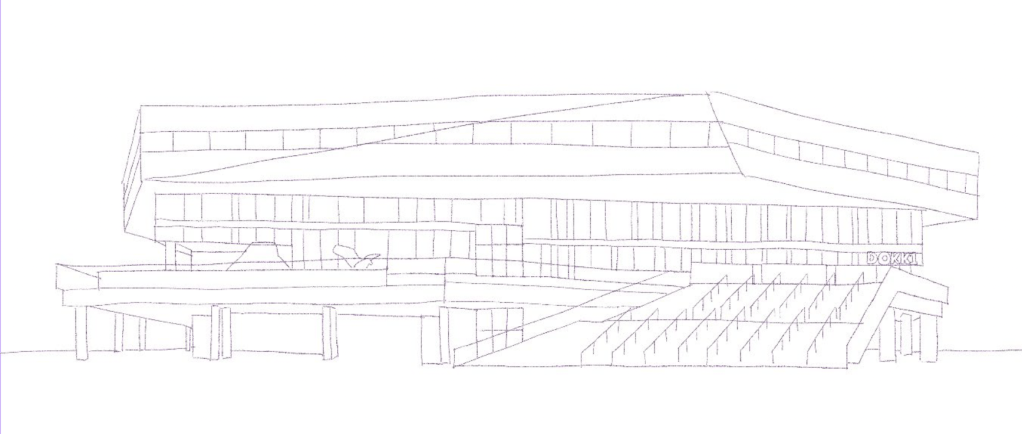
DOKK1 sketch
Workshop
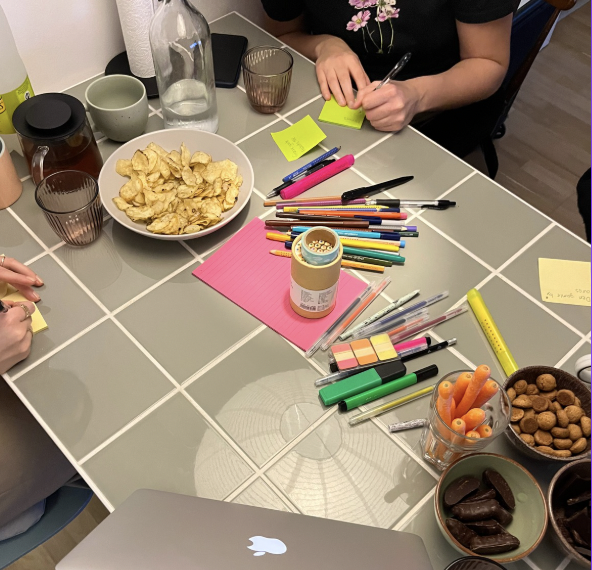
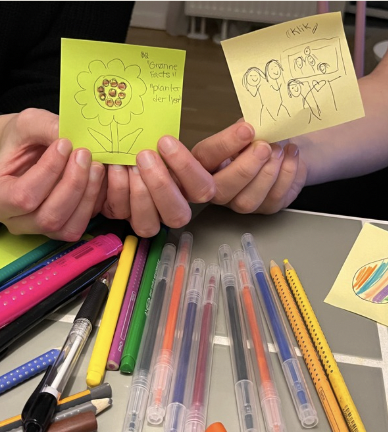
The purpose of the workshop was to introduce participants to our design concept and gather their insights to further develop and refine the idea.
The session included an icebreaker, two brainstorming activities, and a final presentation and feedback of ideas. By engaging users in the creative process, we aimed to ensure the design responds meaningfully to real needs and experiences.
Photos from workshop
Final idea
Based on the workshop we developed our final idea: Light the Rainbow, which invites visitors in ARoS’ Your Rainbow Panorama to press a colorful button, triggering a light installation at Dokk1 and an audio message: “You just lit up the rainbow! Thank you!”. A motion sensor also plays a prompt – “Please light the rainbow” – to encourage interaction. The concept integrates feedback, feedforward, and affordances, aiming to create a playful connection between ARoS and Dokk1 while collecting visitor data.
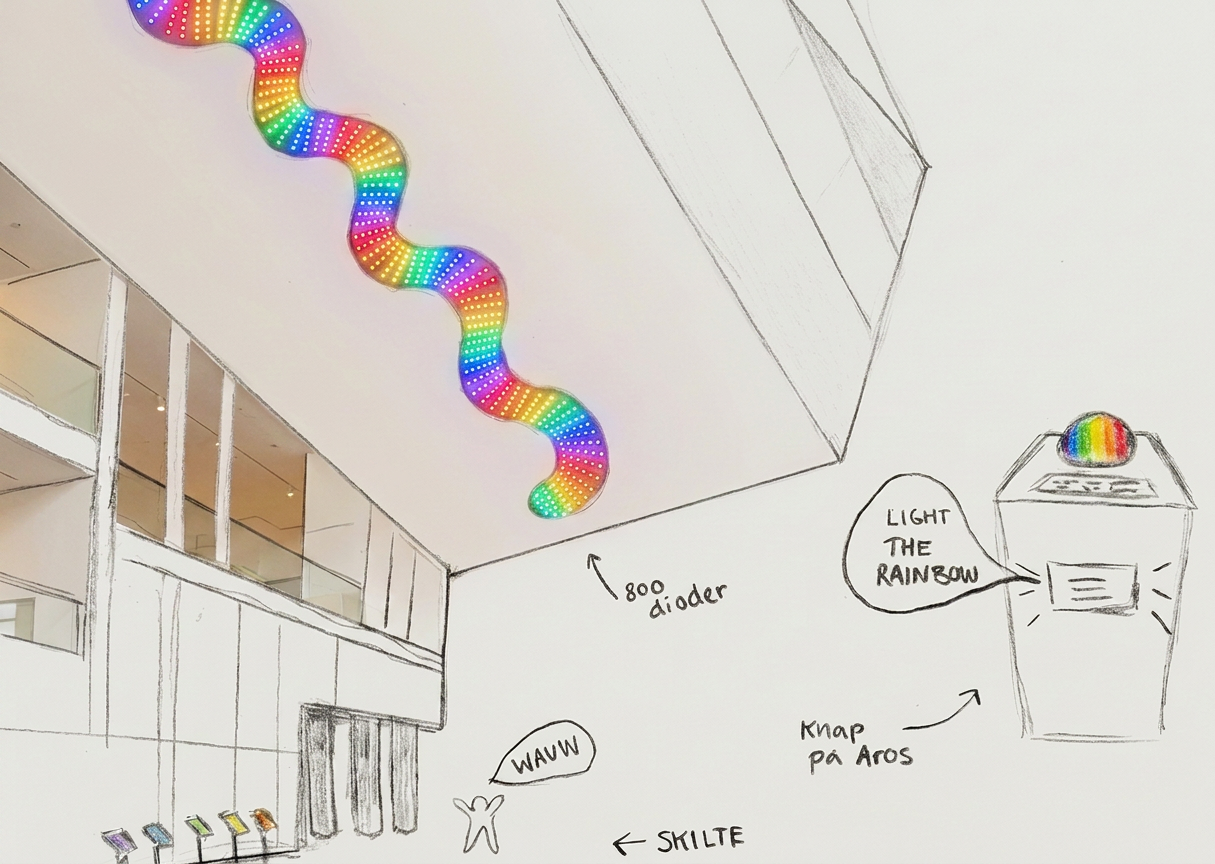
Sketch (enhanced with AI)
The migration ritual
About the project
This project was a continuation of the previous assignment. It involved developing a functional interactive prototype to demonstrate a design concept for the outdoor area at Dokk1. The prototype had to respond to user input (e.g. button, mouse click, or sensor) and produce an output, simulating interaction. It also incorporated data from Aarhus Open Data.
The idea
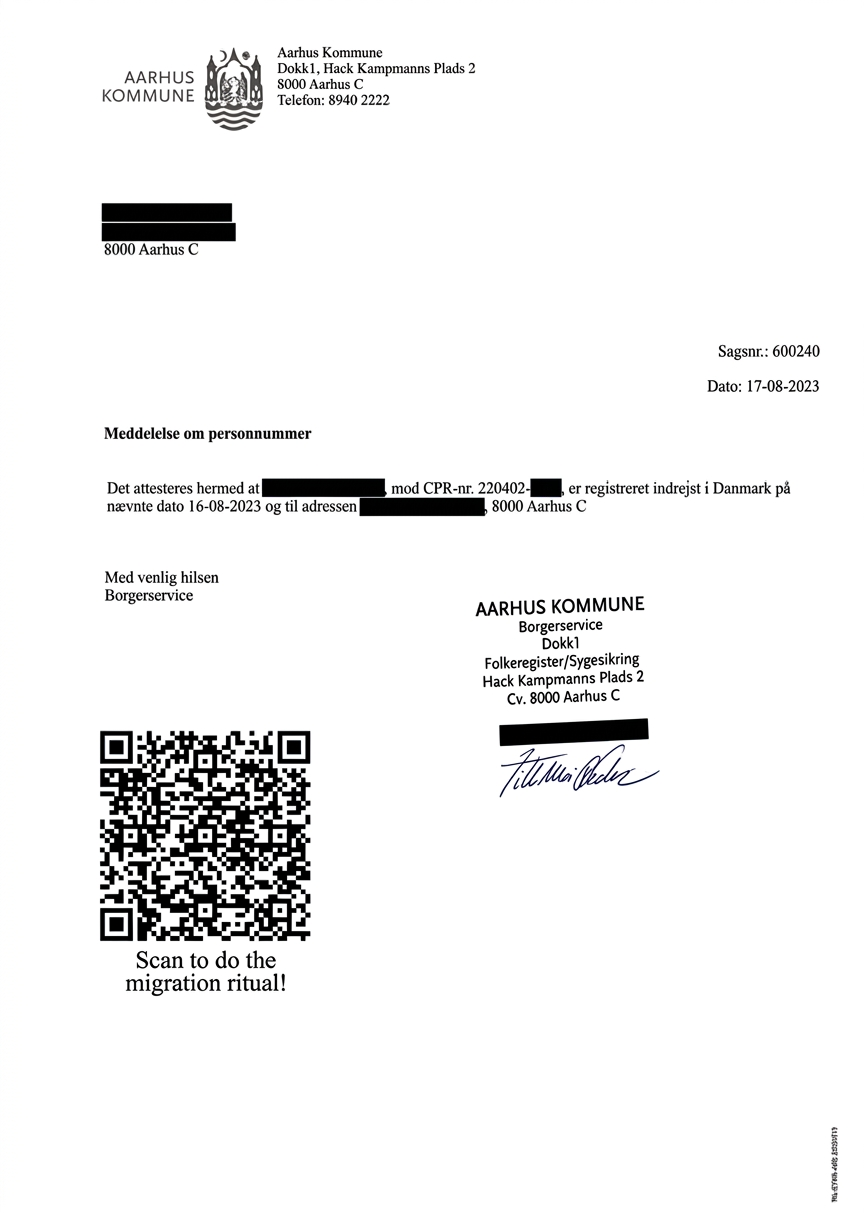
The design idea aims to reconfigure the experience of receiving a CPR number as a migrant – making it more welcoming and enjoyable to be a migrant in Aarhus.
Figma prototype
ritual Steps
We chose to design the ritual in Figma. Our intention was for the ritual to take place digitally therefore, when citizens receive their registration certificate, it includes a QR code. When the QR code is scanned, it will lead to a website where the user can easily complete the ritual using their smartphone.
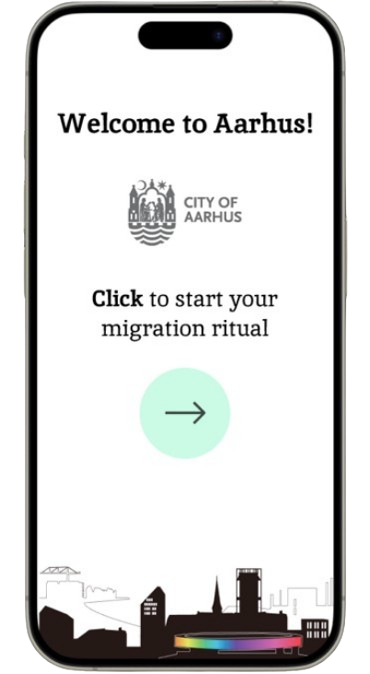
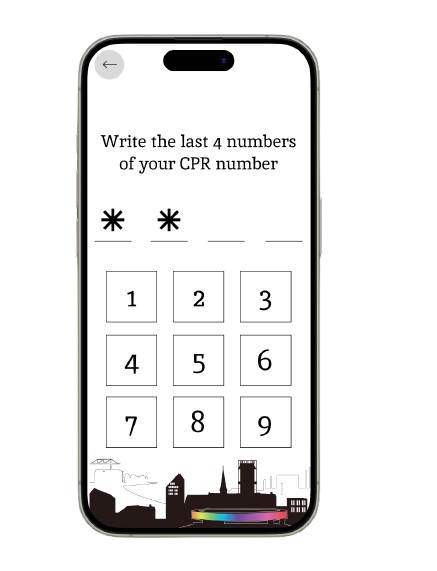
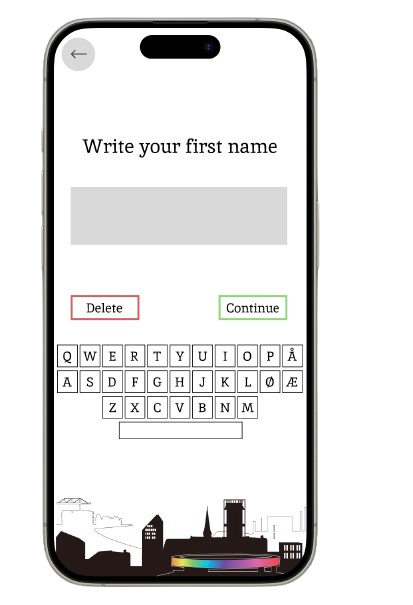
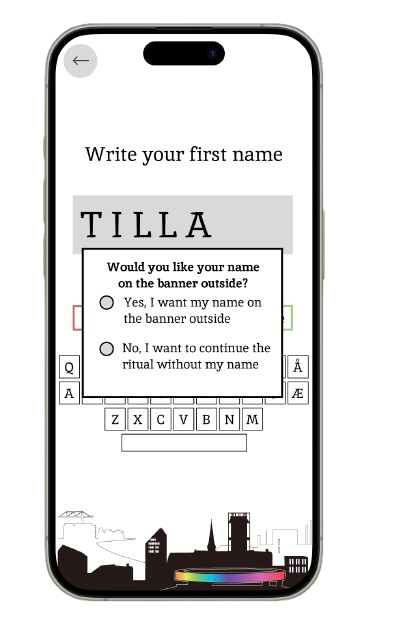
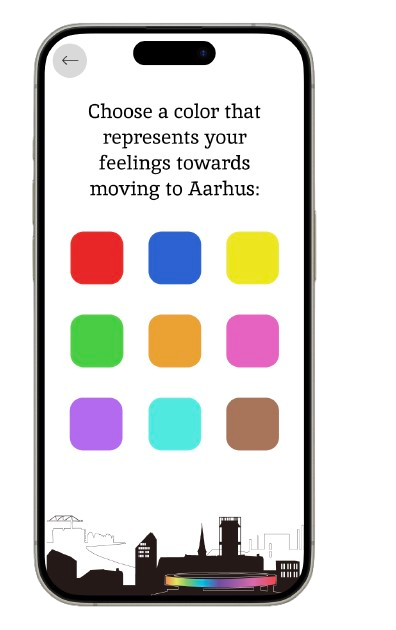
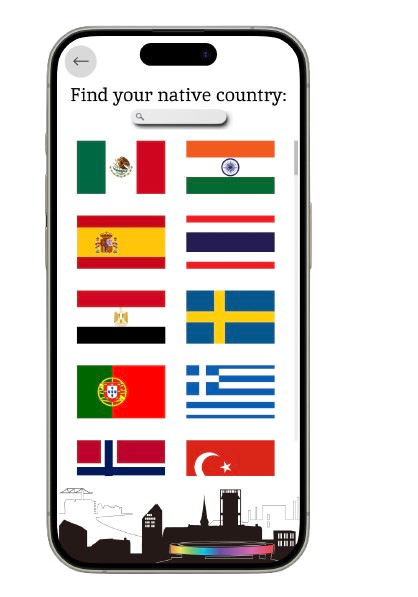
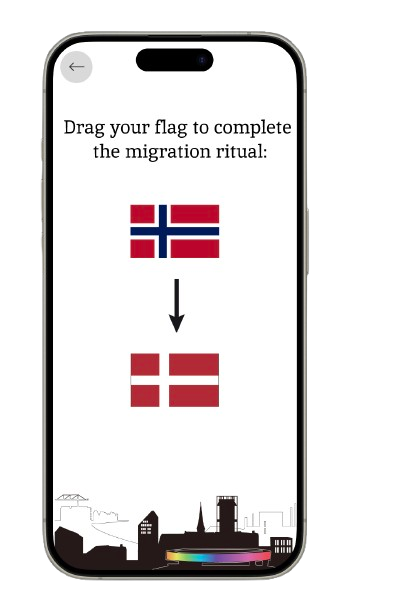
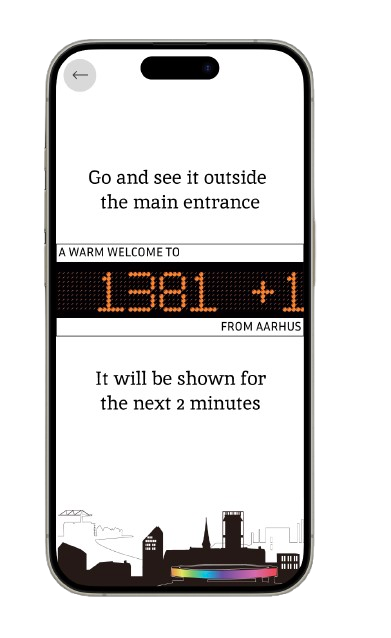
- Write last four numbers in CPR-number
- Write first name
- Choose if you would like to have your name displayed
- Choose color
- Find your flag
- Merge flags
- Go outside to see your personal welcome
User flow
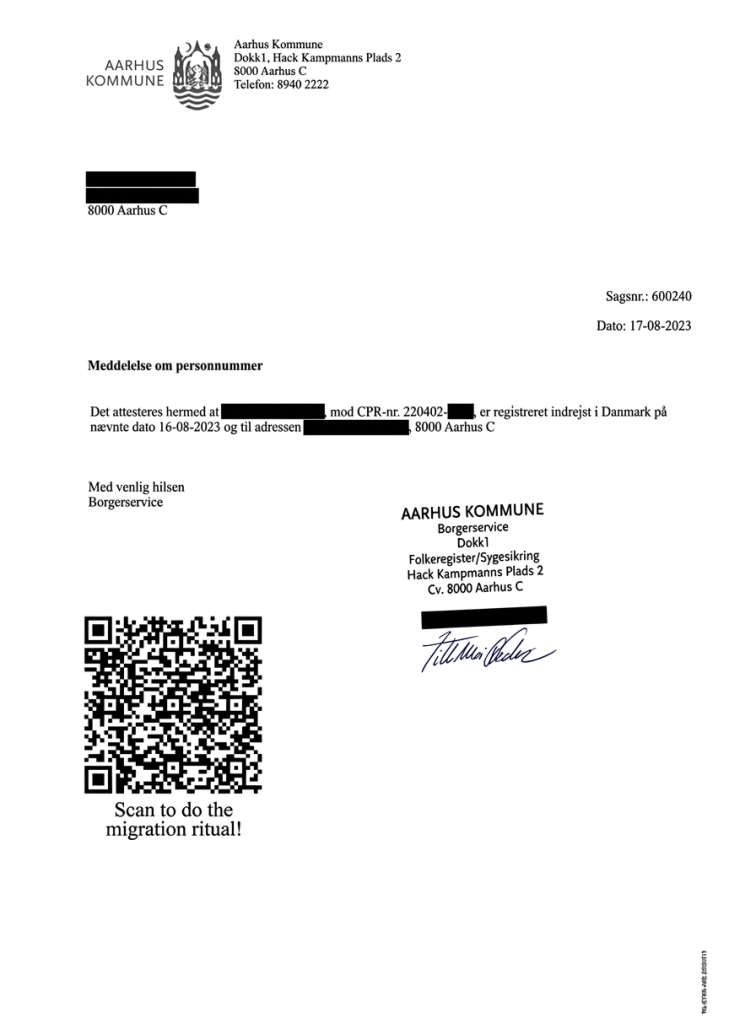
The user scans the QR-code on their civil registration certificate

The user performs the ritual on their smartphone

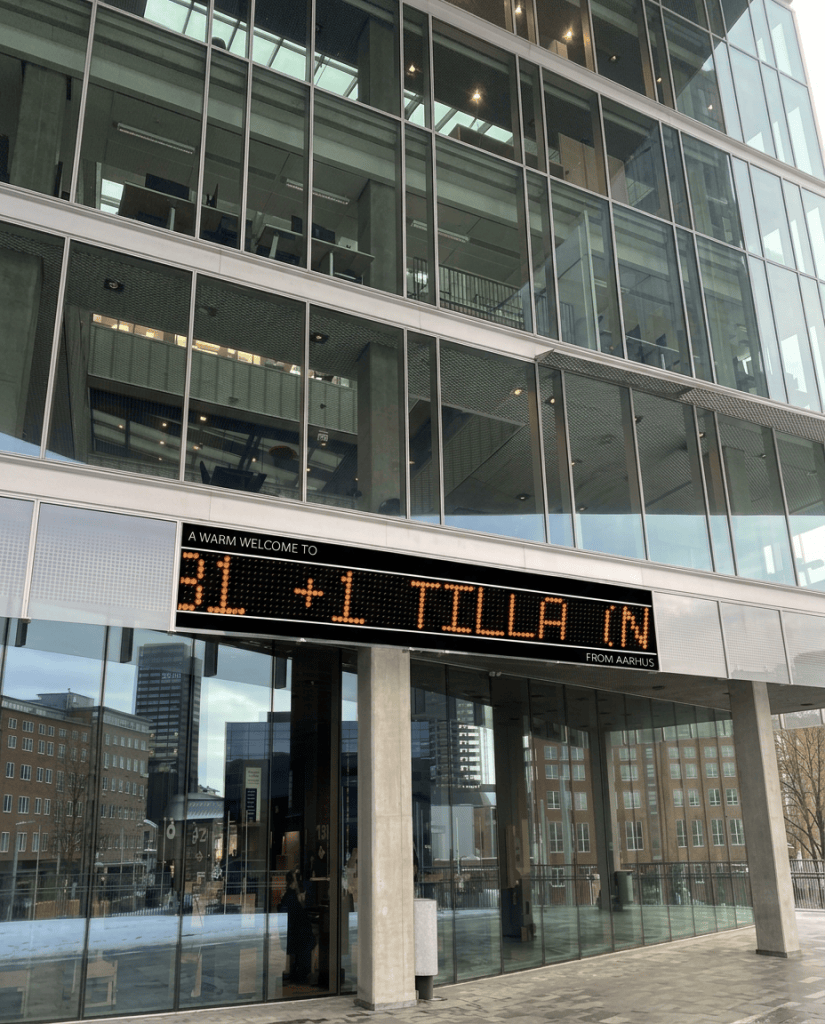
The user can now go to the main entrance and see their personal welcome
p5.js intro
p5.js is an intuitive JavaScript library created by Lauren McCarthy. The following projects were created using p5.js as a way to explore, learn, and play with coding. Its simplicity makes it easy to quickly turn code into interactive visuals. View more p5.js projects in my Gitlab.
Moon&earth throbber
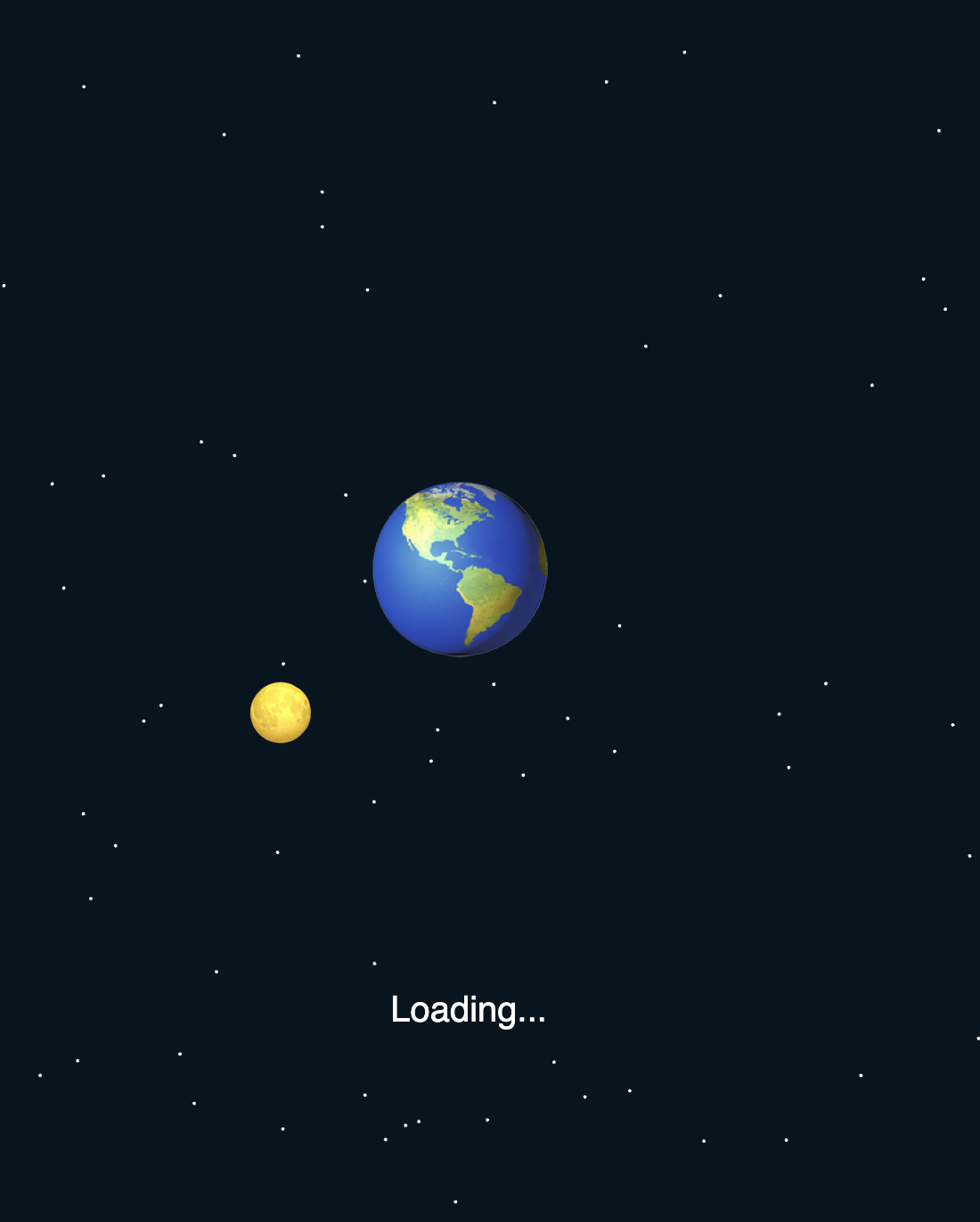
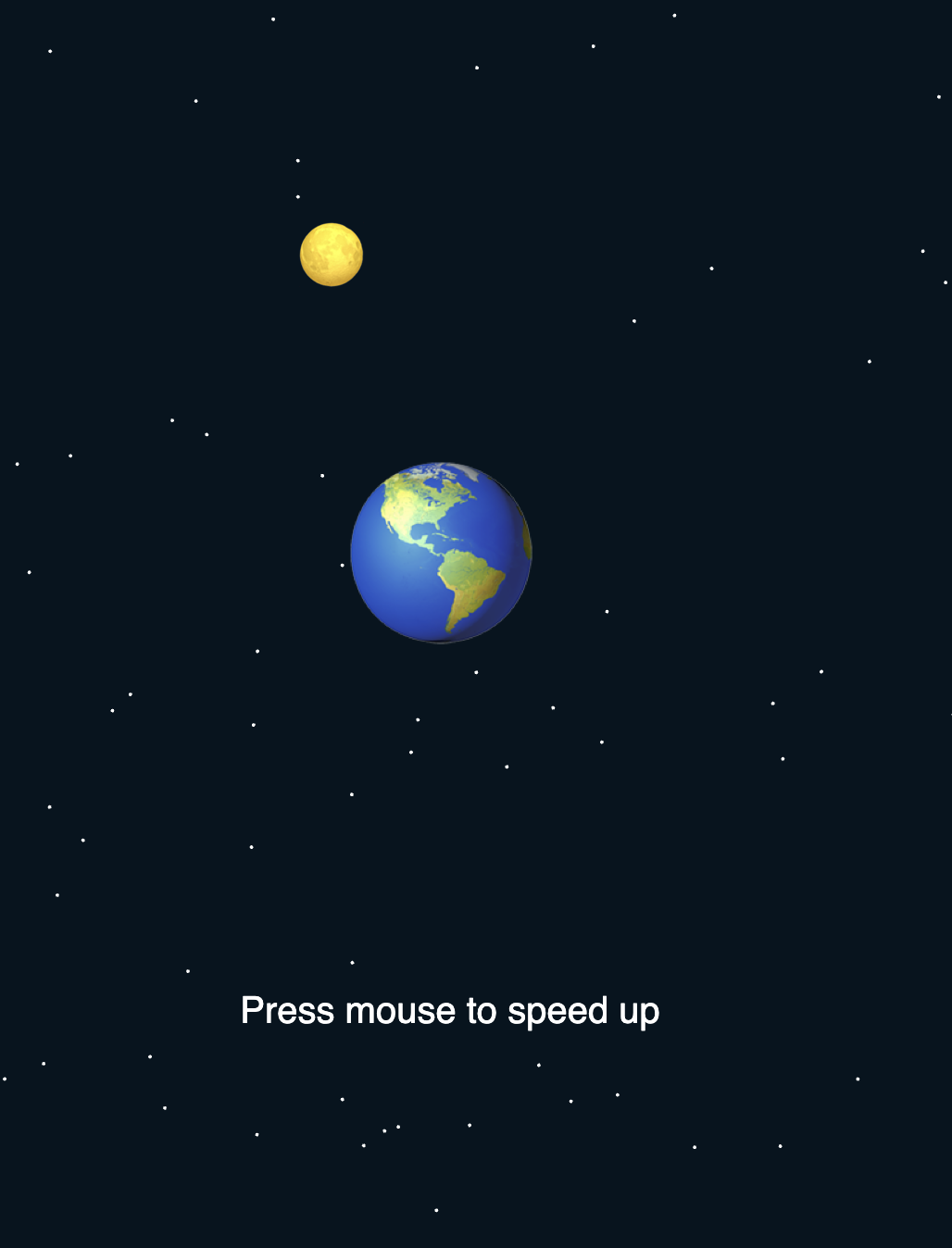
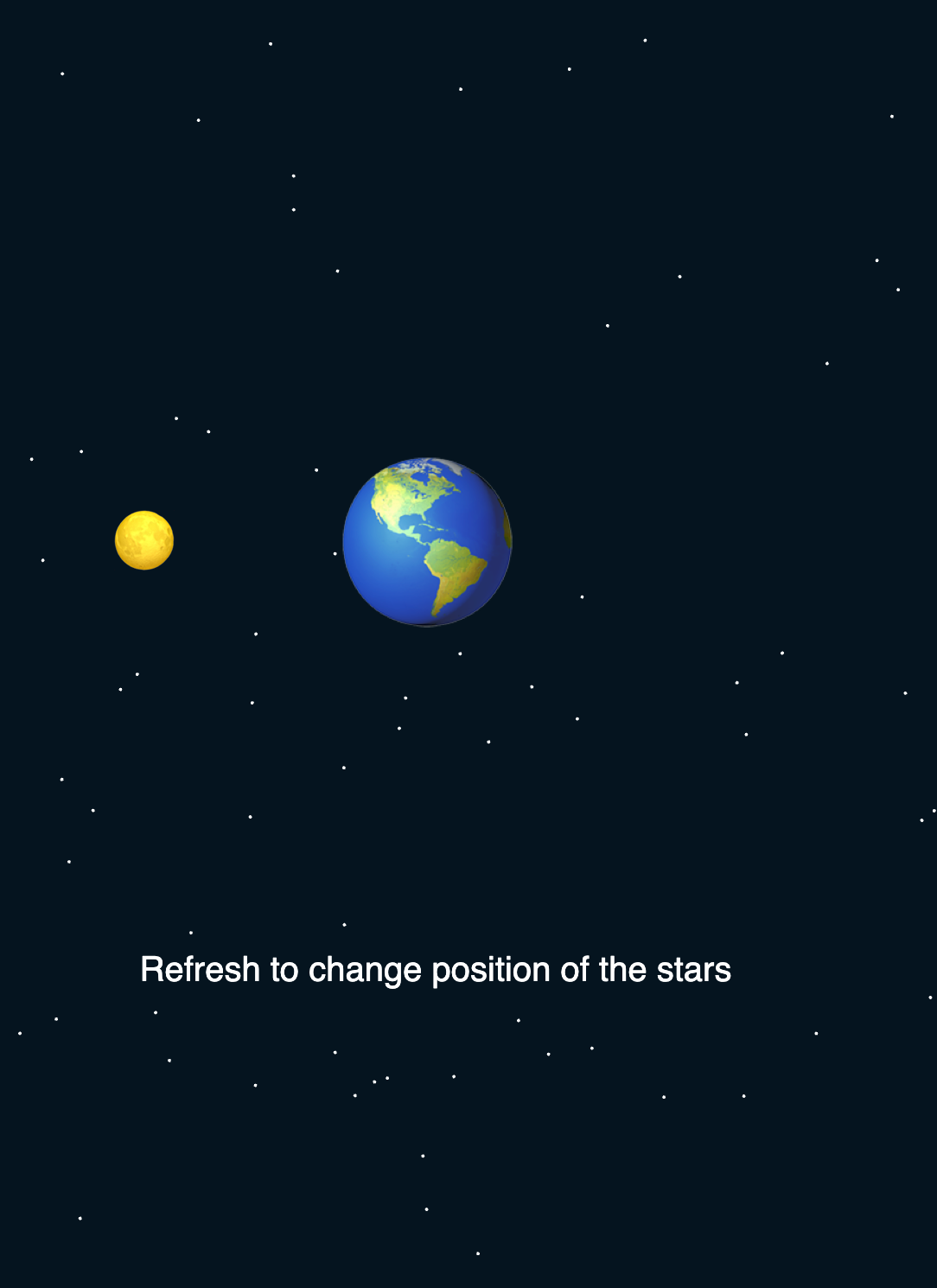
A throbber is a small visual indicator that shows a system is loading. Something we’ve all encountered in our digital lives.
The inspiration for my throbber came from my fascination with space. The universe is full of complex systems and astronomical phenomena that unfold over time, and I wanted to capture that sense of movement and transformation.
I aimed to design a throbber that is visually engaging enough to reduce impatience during loading times. I incorporated elements such as dynamic text changes and a feature that allows the user to adjust the speed of the moon.
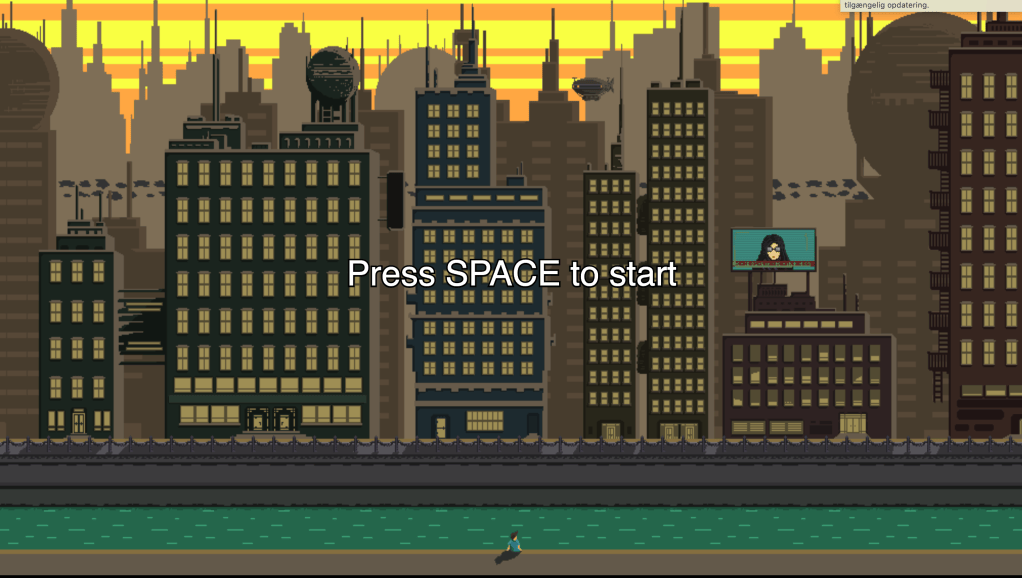
SKater game
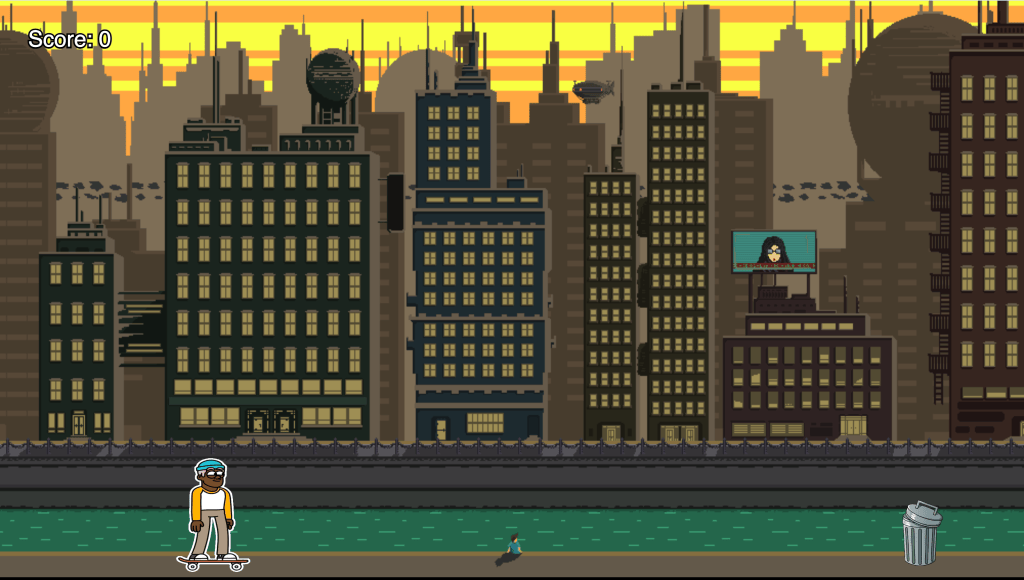
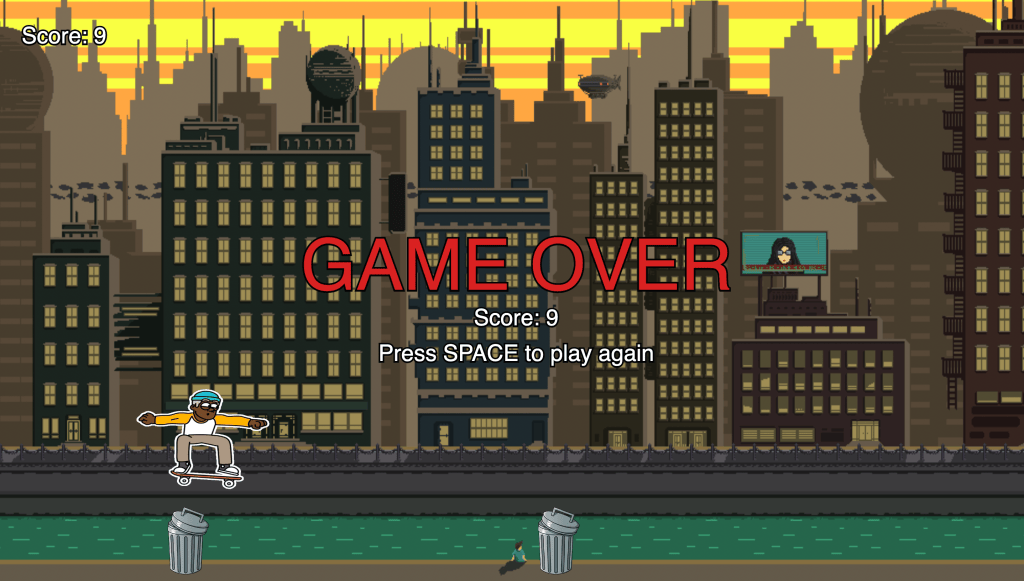
This game is inspired by Google Chrome’s Dinosaur Game.
In my version, the concept remains similar: instead of a dinosaur jumping over cacti, a skater jumps over trash cans. The gameplay is simple and intuitive – the player presses the space bar to make the skater jump, earning points for each successful jump. If the skater collides with a trash can, the game ends.
furnifind
About the project
This project included identifying a potential problem, pain or gain that we experience in our everyday lives and designing a solution for it using SwiftUI – a UI framework created by Apple.
Idea
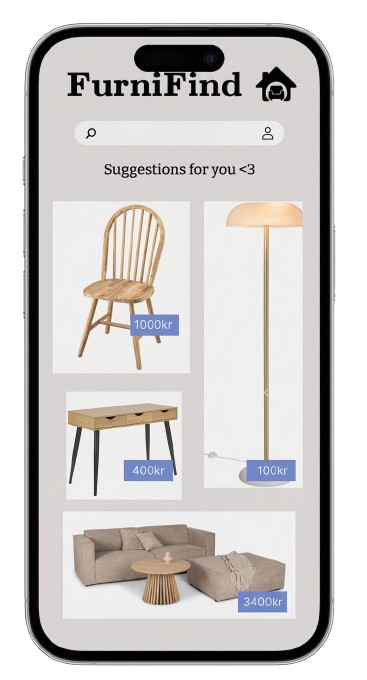
The idea arose from the fact that it can be very hard to find secondhand furniture online, that matches both your style and budget.
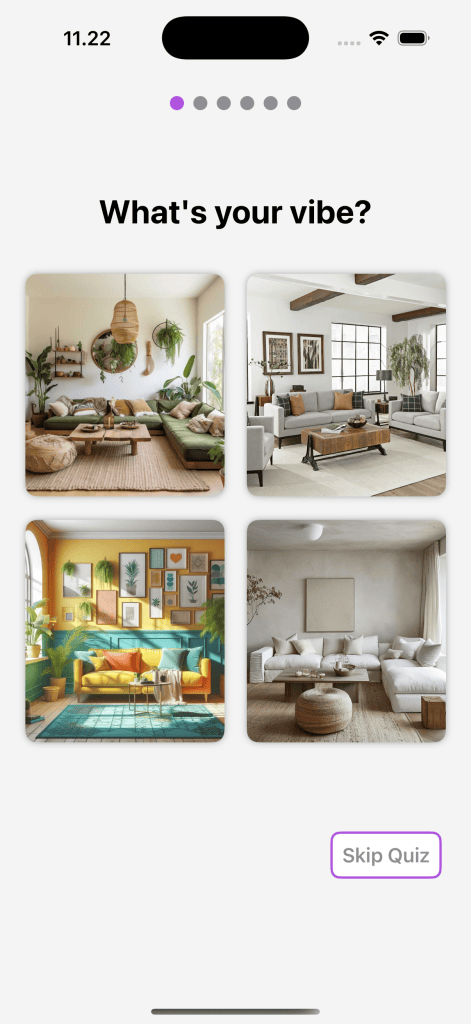
From this, the idea for ‘Furnifind’ arose – an app that collects data from various online marketplaces and gathers it in one place. Based on a personalized style quiz, the app finds furniture that matches the user’s personal style.
User study
As part of the project, we conducted a quantitative user study using a low-fidelity prototype created in Figma. We presented the prototype to users and asked them questions to evaluate their impressions and understanding of the concept.
Our goal was to measure the following:
- Clarity: Does our prototype clearly communicate its purpose?
- Appeal: Do users like the design, color scheme, and overall aesthetic?
- Alignment: Does it match users’ expectations for a furniture app?
swiftui prototype
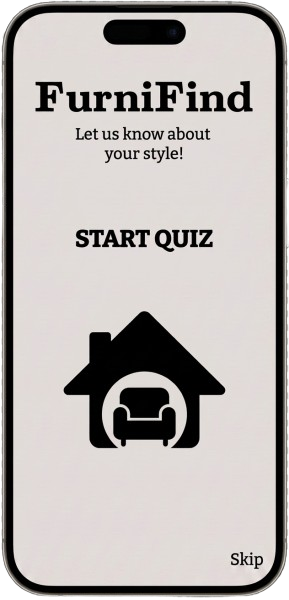
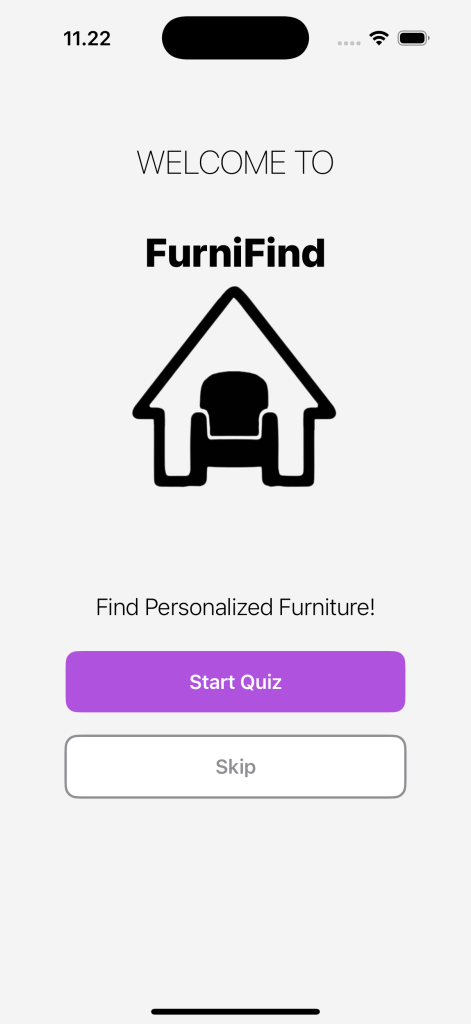
In the final swiftUI prototype, we focused on a simple and minimalistic design, reflecting the preferences highlighted by users during our study. We added a pop of purple to create a recognizable identity and draw attention – particularly to the “Start Quiz” button, encouraging interaction.
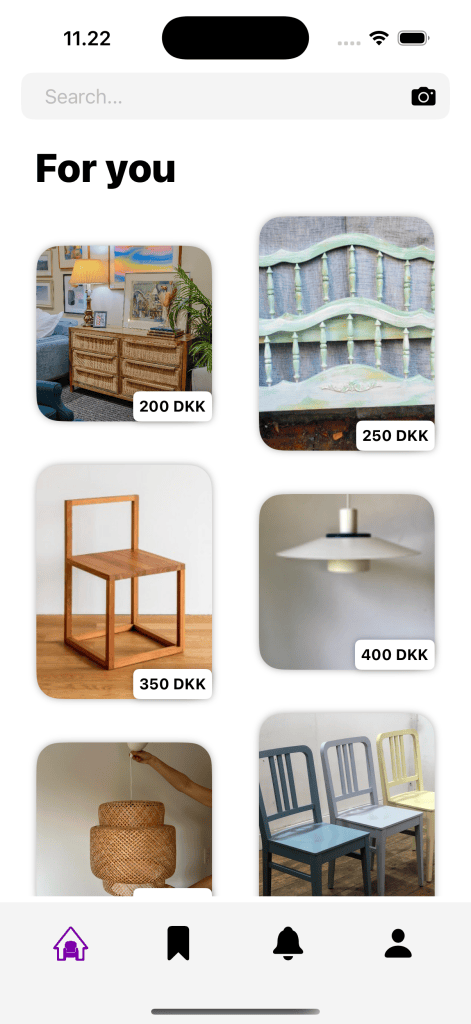
The ‘For You’ page, is inspired by Instagram and Pinterest layouts, focusing on a visually engaging and personalized content feed.
Festival planning
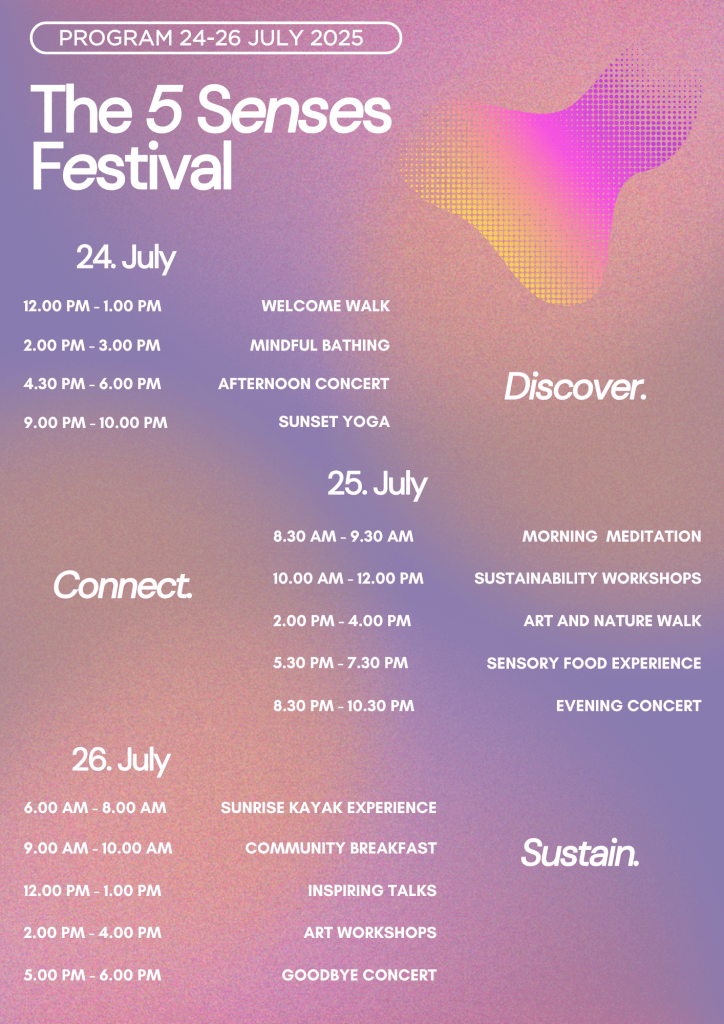
During the course Arts management we were to plan out a festival including making a budget, a programme and a funding plan. The 5 Senses Festival is a three-day event that engages all five senses through art, music, food, and workshops, set in a beautiful Danish landscape. Focused on sustainability, the festival offers plant-based food and aims to reconnect visitors with themselves, others, and the environment through sensory exploration and community.
offtrail
Design brief
“Design a sustainable digital artefact that integrates solar cells and implemented code, grounded in a specific user context.
The artefact should be experienced and tested by users, demonstrating clear insights into the user experience.”
idea

OffTrail is a durable, easy-to-use navigation device that works without internet and constant charging. It’s designed to help you leave your smartphone behind, so your mind can rest and your attention can return to nature. The project is inspired by the concept of permacomputing, which embraces a ‘less is more’ approach, where tech products are designed to be simpler and longer-lasting.
Showcase poster
Brochure
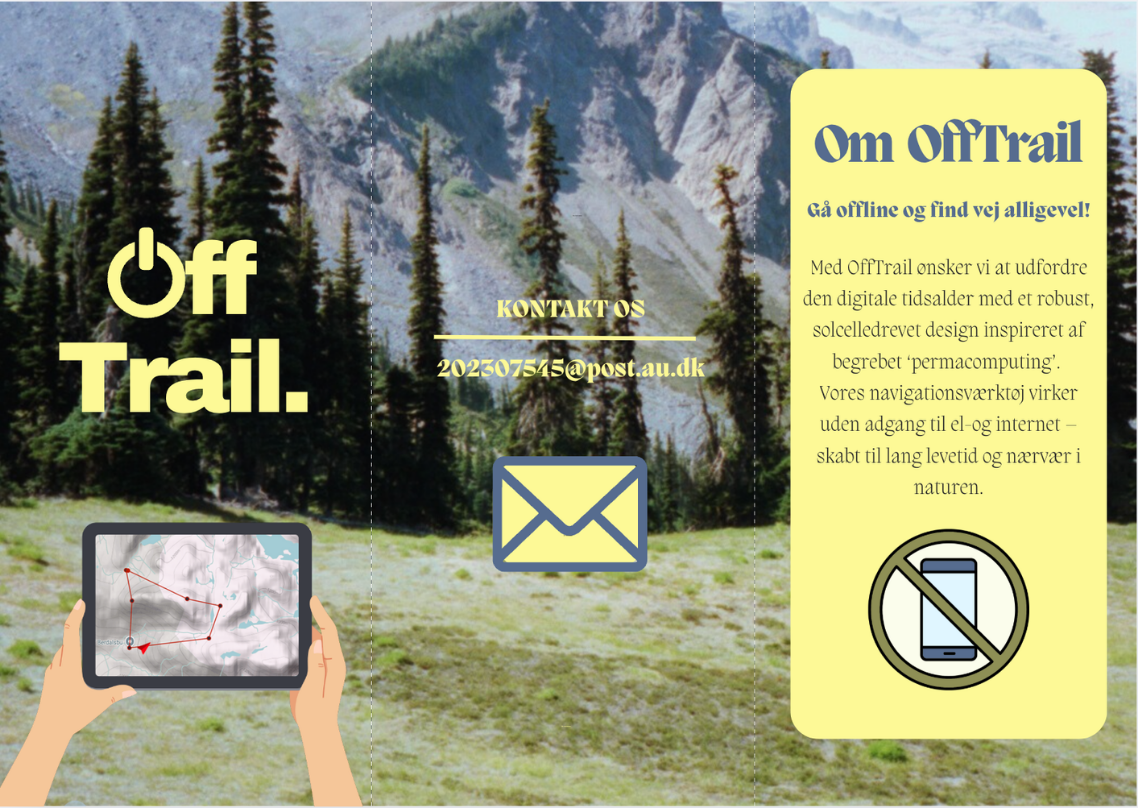
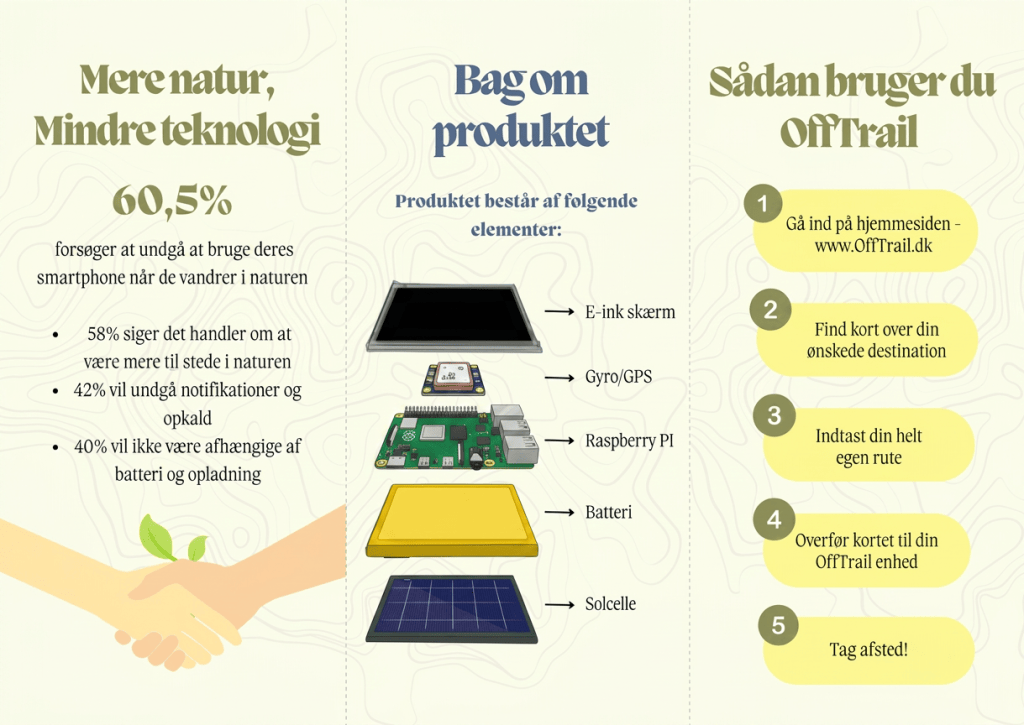
The brochure provides an overview of OffTrail, presenting the idea behind the product, key findings from our user survey, and elements of the prototype. It also includes practical information on how to ‘go off with OffTrail’.
Posters
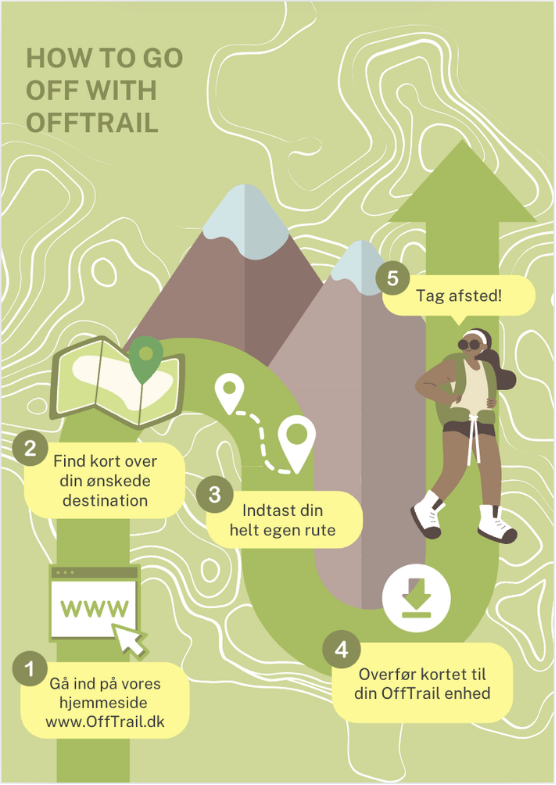
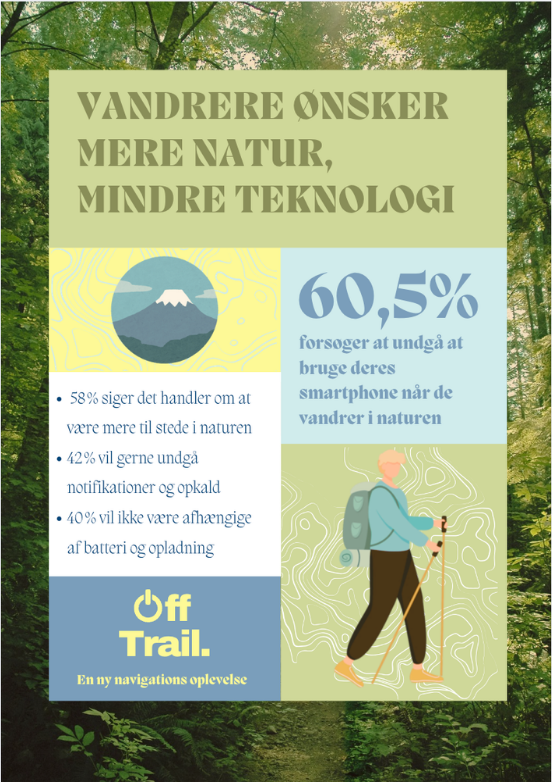
The posters presents key findings from the user study as well as a visual guide on how to use OffTrail.
bachelor’s thesis
digital communication in museum exhibitions
The project examined how Moesgaard Museum in Aarhus uses digital elements in its exhibitions and how these affect accessibility for different user groups, with a focus on people with disabilities.

results
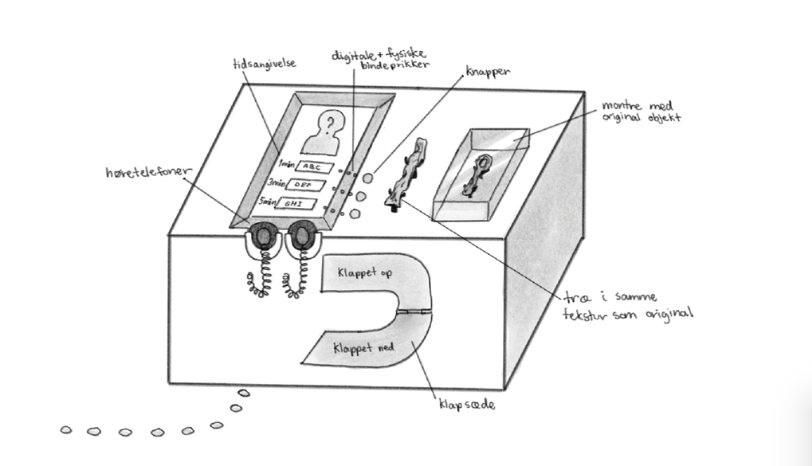
Conceptual design sketch
The results show that the museum has a tendency to assume a “standard user” in how digital tools are designed and used. Some exhibitions unintentionally exclude users who cannot meet these assumed abilities.
In this context, a conceptual design idea is presented for how their exhibitions can be improved.
 Bea Louise